

NEW TO THE NETHERLANDS WITH CHILDREN?
TIPS AND INFORMATION FOR FAMILIES IN THE HAGUE
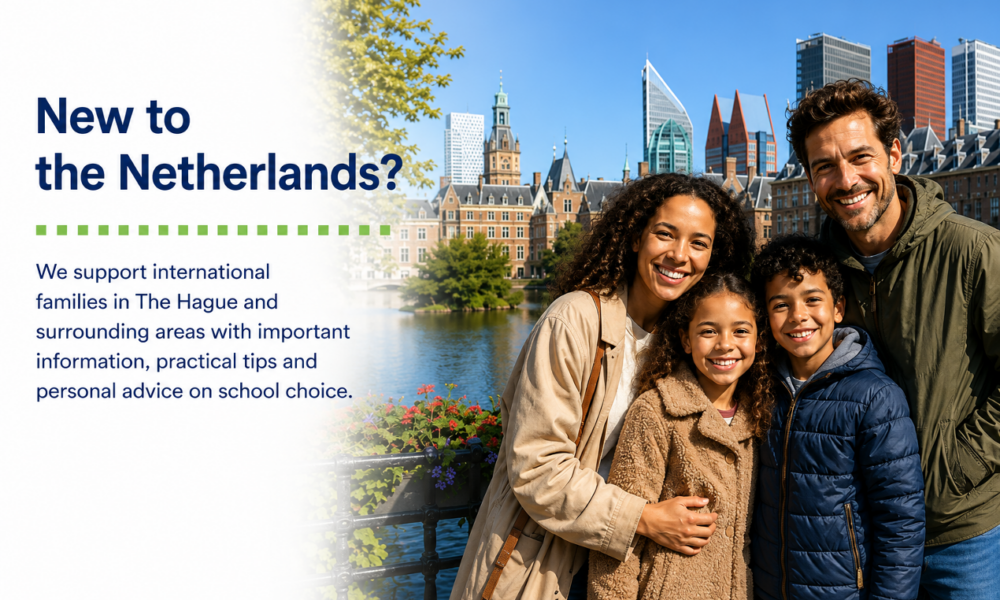

Are you moving to the Netherlands with your family, or planning to relocate to The Hague? Starting out in a new country comes with many organizational questions — from registering with the municipality and applying for a Burgerservicenummer (BSN) to finding housing and choosing the right school for your child.
THE GERMAN INTERNATIONAL SCHOOL THE HAGUE SUPPORTS FAMILIES AS THEY SETTLE IN — FROM THE FIRST ORIENTATION MEETING TO THE START OF SCHOOL.
On this page, families will find important information and practical guidance on moving to the Netherlands, living in The Hague, and starting at an international school. We have compiled the most important topics for newly arrived families: housing, health insurance, bank accounts, childcare, school, healthcare, and leisure and sports activities for children.
You will also find information about public transport, authorities, clubs and associations, and many other topics that are relevant for families after moving to the Netherlands.
For more than 150 years, the German International School The Hague has been supporting international families and understands the challenges that can come with starting over in another country. With the information on this page, we aim to make it easier for you to find your way and to provide an initial overview of life in The Hague and the Netherlands.
CURRENT TIPS FOR YOUR FIRST STEPS IN THE NETHERLANDS
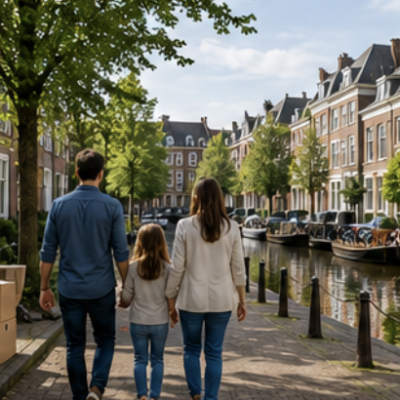

DISCOVER THE GERMAN INTERNATIONAL SCHOOL THE HAGUE

HERE YOU WILL FIND DETAILED INFORMATION TO HELP YOU SETTLE SUCCESSFULLY IN THE NETHERLANDS AND THE HAGUE:
Housing Search
Finding a suitable apartment or house in The Hague and the surrounding area is one of the first important steps for many international families after arrival. This page provides practical information on finding housing, explains key rental terms, and offers guidance on popular residential areas, rental contracts, and the Dutch housing market.
FINDING A HOME IN THE NETHERLANDS
Finding housing in the Netherlands can be time-consuming, especially in cities such as The Hague, Rotterdam, Amsterdam, or Utrecht. Many international families start looking for a rental apartment or house before they move.
Popular platforms for finding housing in the Netherlands include:
- funda.nl
- pararius.com
- directwonen.nl
- dutchhousing.nl
- huure.nl
In addition to online platforms, local real estate agents can also help with finding rental properties and homes for sale. In many neighborhoods of The Hague, real estate agencies can be found directly in the area.
For international families and expats, the following residential areas in The Hague are particularly popular:
- Statenkwartier
- Belgian Park
- Archipelbuurt
- Duinoord
- Vogelwijk
- Bloemenbuurt
- Benoordenhout
Statenkwartier is especially attractive for many families because the German International School The Hague is located there. In addition, this neighborhood and the surrounding area are home to numerous international institutions, embassies, and organizations, making it particularly appealing to international families.
The neighboring municipalities of Wassenaar and Rijswijk are also valued by many families for their good infrastructure, proximity to international schools, and international character.
Die Wohnungssuche in den Niederlanden kann insbesondere in Städten wie Den Haag, Rotterdam, Amsterdam oder Utrecht zeitaufwendig sein. Viele internationale Familien beginnen bereits vor dem Umzug mit der Suche nach einer Mietwohnung oder einem Haus.
Beliebte Plattformen für die Wohnungssuche in den Niederlanden sind:
- funda.nl
- pararius.com
- directwonen.nl
- dutchhousing.nl
- huure.nl
Neben den Online-Portalen unterstützen auch lokale Makler bei der Suche nach Miet- und Eigentumswohnungen. In vielen Stadtteilen von Den Haag finden sich Maklerbüros direkt vor Ort.
Für internationale Familien und Expats sind in Den Haag insbesondere folgende Wohngebiete beliebt:
- Statenkwartier
- Belgisch Park
- Archipelbuurt
- Duinoord
- Vogelwijk
- Bloemenbuurt
- Benoordenhout
Das Statenkwartier ist für viele Familien besonders attraktiv, da sich dort die Deutsche Internationale Schule Den Haag befindet. Zudem liegen in diesem Stadtteil und in der näheren Umgebung zahlreiche internationale Institutionen, Botschaften und Organisationen, was das Viertel besonders interessant für internationale Familien macht.
Auch die Nachbargemeinden Wassenaar und Rijswijk werden von vielen Familien aufgrund ihrer guten Infrastruktur, der Nähe zu internationalen Schulen und ihrer internationalen Ausrichtung geschätzt.
IMPORTANT TERMS WHEN LOOKING FOR HOUSING
Anyone wishing to rent an apartment or house in the Netherlands will quickly come across terms that differ from the terminology commonly used in Germany. The following terms are often used when searching for housing in The Hague and other Dutch cities:
- Benedenwoning: Ground-floor apartment, often with a garden.
- Bovenwoning: Apartment on an upper floor, often with a balcony or roof terrace.
- Gestoffeerd: Rented with flooring, curtains, and usually ceiling lamps.
Unlike in Germany, many apartments in the Netherlands are rented with a fitted kitchen already installed. When searching for housing, families should also pay attention to energy efficiency, proximity to school, and access to public transport.
RENTAL CONTRACT IN THE NETHERLANDS
Once you have found a suitable apartment or house, the next step is usually signing a rental contract in the Netherlands. Especially for international families and expats, some procedures and regulations may differ from those commonly used in Germany. It is therefore worth checking the most important points carefully before signing the contract.
Expats and international families are often regarded as reliable and welcome tenants in the Netherlands. Nevertheless, all agreements relating to the rental contract should be recorded in writing. This applies in particular to any defects identified during the handover of the apartment or house. These should be documented in an inspection report. You should also agree in writing with the real estate agent or landlord by when any damage will be repaired.
Before moving in, it may be useful to arrange for the landlord to carry out professional cleaning of carpets, curtains, or the kitchen, if necessary. Such agreements should also be confirmed in writing whenever possible.
If problems arise after moving in regarding the rent, rental contract, or condition of the property, tenants in the Netherlands can receive support. In certain cases, the Huurcommissie can help with rental issues. The Juridisch Loket also offers initial legal advice.
Further information can be found at:
huurcommissie.nl
juridischloket.nl
RENTING A HOME IN THE NETHERLANDS: IMPORTANT TIPS
Anyone wishing to rent an apartment or house in the Netherlands should familiarize themselves with some specific aspects of Dutch tenancy law before signing the rental contract. For international families and expats in The Hague in particular, it is helpful to understand important contract terms, costs, and responsibilities at an early stage.
When reviewing a rental contract in the Netherlands, pay particular attention to the following points:
Request a rental contract in English whenever possible if you do not speak Dutch.
If you appoint your own real estate agent, a commission equivalent to one month’s rent plus VAT, known as BTW, is often charged.
A deposit equivalent to one month’s rent is common for many rental properties.
The rent may be adjusted annually in accordance with legal regulations.
Certain charges, municipal taxes, and costs for regular maintenance, for example for central heating, may be borne by the tenant.
A so-called “Diplomatic Clause” can be useful for expats. Under certain conditions, it allows for early termination of the rental contract, for example if an employment contract in the Netherlands is not extended.
Minor repairs are often the responsibility of the tenant, while larger maintenance work is generally the responsibility of the landlord.
When moving out, the apartment or house must be returned in the agreed condition. Agreements regarding floors, curtains, fixtures, or other items taken over should therefore be recorded in writing when the contract is signed.
Even though verbal agreements in the Netherlands are often made in an uncomplicated way, it is generally advisable to document all important agreements in writing.
Especially in popular residential areas of The Hague, international families should allow enough time for the housing search and prepare all required documents at an early stage.
BANKING
Anyone who is new to the Netherlands will usually need a Dutch bank account for everyday life. On this page, international families and expats will find helpful information on opening a bank account, payments, online banking, cash machines, and important banking terms in the Netherlands.
BANKS IN THE NETHERLANDS
For newly arrived families and expats, opening a bank account is one of the first important steps after moving to the Netherlands. Well-known banks in the Netherlands include ABN AMRO, ING, Rabobank, and ASN Bank. There are also other banks and online banks that may be of interest to international families.
ABN AMRO Bank > www.abnamro.nl
ING Bank > www.ing.nl
Rabobank > www.rabobank.nl
Many Dutch banks also offer insurance products, such as home contents insurance, known as inboedelverzekering, which can often be combined directly with a bank account.
OPENING A BANK ACCOUNT AND MAKING PAYMENTS IN THE NETHERLANDS
To open a bank account in the Netherlands, you generally need a BSN, or Burgerservicenummer, a valid form of identification, and proof of your residential address. Many banks allow you to open an account either online or at a local branch.
For opening a bank account, you should generally have the following documents ready:
- valid passport or identity card
- residence certificate, if applicable
- BSN, or Burgerservicenummer, which is issued when you register in the Netherlands
- proof of residential address, such as a rental contract, an extract from the population
- register, or a utility bill addressed to you showing your address
- proof of income or employment contract
- for a joint account: identity documents for both partners
A private current account is usually referred to in the Netherlands as a “betaalrekening” or “privérekening.” Transfers, bank statements, and account management are now mostly handled through online banking or banking apps.
BANK TRANSFERS AND ONLINE BANKING
Making payments in the Netherlands differs from Germany in several ways. Card payments, online banking, and digital payment methods are widespread and used almost everywhere in everyday life.
iDEAL – The most commonly used online payment system in the Netherlands. With iDEAL, online purchases, invoices, and many services can be paid directly from your own bank account. Almost all Dutch online shops and many public authorities offer iDEAL as a payment method.
Automatisch overschrijven – Standing orders and direct debits, for example for rent, electricity, gas, internet, or telephone.
Pinpas – The Dutch term for a debit card, or bank card.
Pinnen – Paying by debit card. This is the usual payment method in most shops, restaurants, and service providers. Even small amounts are often paid without cash. The personal PIN code is provided by the bank and can usually be changed.
Acceptgiro – Payment slips for invoices that used to be widely used. This system has now largely been replaced by digital payment methods such as iDEAL, but the term may still occasionally appear.
In the Netherlands, most shops, restaurants, and supermarkets accept cashless payments. Debit cards, contactless payments by smartphone or smartwatch, and mobile payment methods are accepted almost everywhere.
CASH MACHINES
Many Dutch banks now have only a few traditional cash desks in their branches. Cash can be withdrawn from cash machines, known as geldautomaten. Within the Netherlands, customers can usually also withdraw money from cash machines belonging to other banks.
In many cities, former bank cash machines have been replaced by so-called Geldmaat machines. These shared cash machines used by Dutch banks can be recognized by their yellow-and-black design and can be found in shopping centers, neighborhoods, and train stations.
If a bank card is lost or stolen, it should be blocked immediately. The current emergency numbers can be found on your bank’s website.
BANKING TERMS
Anyone opening a bank account in the Netherlands will often come across Dutch banking and payment terms. The following overview explains the most important terms in Dutch, German, and English.
| Naam/ NL | Name / DE | Name / EN |
| Overschrijving | Überweisung | Transfer |
| Plaats | Wohnort | Town (place) |
| Opdracht | Zahlungsauftrag | (Payment) Order |
| Rekening | Konto | Account |
| Incasso | Lastschrift | Direct Debit |
| Pas | Bankkarte | Debit Card |
| Bedrag | Betrag | Amount |
| Betaling | Bezahlung | Payment |
| Incassomachtiging | Lastschriftmandat | Direct Debit Authority |
| Aanbetaling | Anzahlung | Deposit |

INTERNET AND TELEVISION
After moving, many families want to be reachable online as quickly as possible and set up internet, mobile phone service, or television. This page provides an overview of providers, fiber-optic internet, Wi-Fi, mobile phone contracts, TV packages, and streaming services in the Netherlands.
INTERNET PROVIDERS IN THE NETHERLANDS
For families and expats, setting up an internet connection is one of the first important steps after moving to the Netherlands. Some of the best-known providers for internet, mobile phone service, and television include:
KPN > www.kpn.com
Odido > www.odido.nl
Vodafone Ziggo > www.vodafone.nl
Ziggo > www.ziggo.nl
Depending on where you live, fiber-optic, cable, or DSL connections are available in the Netherlands. In many parts of The Hague and the surrounding area, the fiber-optic network is being continuously expanded, which means that very fast internet connections are often available.
As setting up a new connection can take some time, it is advisable to apply for internet and mobile phone services as early as possible — ideally before or shortly after moving.
INTERNET, MOBILE PHONE SERVICE, AND TELEVISION
Most households in the Netherlands have a broadband connection via fiber optic or cable. Wi-Fi is widely used and is generally included in the internet package.
Many providers offer so-called combination packages that bundle internet, landline telephone service, mobile phone service, and television. This can often help reduce costs and makes it convenient to manage several contracts through one provider.
To take out a mobile phone contract in the Netherlands, you generally need a Dutch bank account and a residential address. Alternatively, prepaid SIM cards are also available and can be practical, especially during the first period after moving.
TELEVISION AND STREAMING IN THE NETHERLANDS
In addition to traditional television channels, many households in the Netherlands use streaming services such as Netflix, Disney+, Videoland, or NPO Start. Many internet providers offer digital TV packages that are either already included in the internet contract or can be added optionally.
International families should check which German-language or international channels are included in the respective TV packages. Many programs can also be accessed through streaming services, media libraries, or the broadcasters’ apps.
ENERGY SUPPLY AND WASTE
Anyone who is new to the Netherlands should arrange electricity, gas, water, and waste disposal in good time. On this page, international families and expats will find helpful information on energy providers, water supply, waste separation, bulky waste, and important points of contact in The Hague and the surrounding area.
ELECTRICITY AND GAS PROVIDERS IN THE NETHERLANDS
In the Netherlands, you are free to choose your electricity and gas provider. Prices and contract terms can vary considerably. An up-to-date overview of providers and tariffs is available on comparison portals such as:
WATER SUPPLY IN THE NETHERLANDS
Dunea is responsible for the drinking water supply in The Hague and the surrounding area. After moving in, you should register your new address with Dunea as soon as possible to ensure that your water supply is correctly set up.
Find more information:
WASTE SEPARATION AND DISPOSAL
Waste separation and disposal in the Netherlands differ in some respects from the rules in Germany. Which types of waste are collected separately and when collection takes place depends on the municipality and the neighborhood.
For current information on waste disposal in The Hague:
- denhaag.nl/en/residents
For some municipalities in the area surrounding The Hague:
- avalex.nl
Die Mülltrennung und Abfallentsorgung in den Niederlanden unterscheidet sich teilweise von den Regelungen in Deutschland. Welche Abfallarten getrennt gesammelt werden und wann die Leerung erfolgt, hängt von der jeweiligen Gemeinde und dem Stadtteil ab.
Für aktuelle Informationen zur Abfallentsorgung in Den Haag:
- denhaag.nl/en/residents
Für einige Gemeinden im Umland von Den Haag:
- avalex.nl
Important notes:
• Residual waste is often disposed of via underground collection containers in residential areas.
• Paper, glass, and packaging materials are collected separately.
• Organic waste, known in Dutch as GFT, for vegetable, fruit, garden, and food waste, is collected in a separate bin depending on the residential area.
• Collection intervals vary depending on the municipality and neighborhood.
Bulky waste and larger items:
For furniture, electrical appliances, or other larger items, a free or paid collection can usually be arranged. In many municipalities, registration or a so-called Afvalpas is required. The Afvalpas is a personal waste card that is needed to open certain collection containers or to use waste disposal facilities.
Further information on waste disposal and applying for an Afvalpas can be found on your municipality’s website:
REGISTERING WITH THE MUNICIPALITY
Anyone who is new to the Netherlands must register with the responsible municipality and will be entered into the Dutch population register. On this page, international families and expats will find helpful information on registering with the municipality, applying for a BSN, required documents, and further steps after moving to The Hague.
REGISTERING WITH THE MUNICIPALITY IN THE NETHERLANDS
Anyone moving to the Netherlands and staying for longer than four months must register with the responsible municipality within five days of moving in. Registration also includes entry into the Dutch population register, the Basisregistratie Personen (BRP).
Exceptions may apply to employees of international organizations and their families, for example at EPO, ESTEC, NATO, or embassies. In these cases, a separate registration process is often required. Appointments are usually made by telephone.
Gemeente Den Haag – Immigration Office – Civil Affairs Department
Stadhoudersplantsoen 24
2517 JL The Hague
Tel.: 0031-70 35 33 000
Mon.–Fri., 8:00 a.m. to 8:00 p.m.
For registrations in surrounding municipalities, please consult the respective municipality’s website.
Depending on availability, it may take around two to three weeks until your appointment. All family members entering the country must appear in person at the appointment. It is therefore advisable to schedule the appointment before moving to The Hague.
The International Centre The Hague (ICDH) supports international families and expats as they settle into life in the Netherlands. There, you can obtain information on registration, living and working, schools, and other administrative matters.
Address:
City Hall (Atrium)
Spui 70
2511 BT The Hague
APPLYING FOR AND RECEIVING A BSN
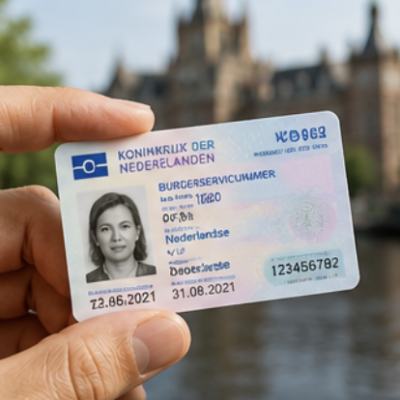
The Burgerservicenummer (BSN) is your personal identification number in the Netherlands. It is required for many official procedures and everyday matters, for example:
• opening a bank account
• taking out health insurance
• starting employment
• using DigiD and other digital government services
Further information about the BSN can be found on the website of the Municipality of The Hague:
denhaag.nl/en/residents/to/Burgerservicenummer-BSN.htm
Depending on your personal situation, the following documents may be required for registration with the municipality and entry into the Dutch population register, the Basisregistratie Personen (BRP):
- valid passport or identity card
- employment contract, if available
- certified or international birth certificate
- marriage certificate or, if applicable, divorce decree and custody decision for minors
- rental contract or other proof of residential address
After receiving your BSN, you can apply for a DigiD. With this digital identity, you can handle many official matters online, for example with the municipality, the tax authorities, or your health insurer.
Further information:
digid.nl
REGISTERING A CAR IN THE NETHERLANDS
Continuing to use a car after moving to the Netherlands usually involves a number of formalities. Depending on whether the vehicle is to be permanently imported or newly registered, the Dutch customs authority, the BPM regulation, and the Dutch vehicle registration authority RDW are important. International families and expats should therefore inform themselves early about vehicle registration, technical inspection, and Dutch license plates.
REGISTERING A CAR IN THE NETHERLANDS
If you wish to permanently import your vehicle into the Netherlands, you must first apply to the Dutch customs authority, the Douane, for an exemption from import tax and BPM. BPM stands for Belasting van Personenauto’s en Motorrijwielen and refers to the Dutch tax on passenger cars and motorcycles.
Further information and the current application forms can be found on the website of the Dutch Tax and Customs Administration:
belastingdienst.nl
Important notes:
• Download the relevant application form and submit it to the Dutch Tax and Customs Administration or the Douane.
• Keep a copy of the application in the vehicle until processing has been completed. This allows you to prove during a check that the procedure has already been started.
• Processing usually takes around six to eight weeks.
• Only after receiving approval can the next steps for vehicle registration in the Netherlands be taken.
Further information on registering the vehicle can then be found at the Dutch vehicle registration authority RDW.
RDW Vehicle Registration in the Netherlands
After receiving the tax exemption, the vehicle must be registered with the Dutch vehicle registration authority, the RDW (Rijksdienst voor het Wegverkeer), and entered in the Dutch vehicle register.
As part of the registration process, a technical inspection known as the APK inspection is required. This inspection must be carried out regardless of whether the vehicle still has a valid German TÜV certificate.
Important information:
- An appointment with the RDW is required for vehicle registration.
- Appointments can be made online at rdw.nl or by telephone with the RDW.
- You should bring all vehicle documents, the manufacturer’s European Certificate of Conformity, the BPM tax exemption, and any other relevant supporting documents to the appointment.
- For vehicles less than one year old, the purchase agreement may also be required.
- It is advisable to make copies of the vehicle documents in advance, as the original documents may be retained during the registration process.
- Once the inspection has been completed successfully, the vehicle will be entered in the Dutch vehicle registration database.
- The costs of the initial technical inspection and registration depend on the vehicle and the relevant inspection centre.
- Anyone staying in the Netherlands for an extended period is generally required to use Dutch licence plates on the vehicle.
After registration, you will receive the documents required to have Dutch licence plates, known in Dutch as kentekens, made. These are not issued directly by the RDW. They can subsequently be ordered from an authorised licence plate supplier.
Up-to-date information about the procedure, costs, and required documents is available on the RDW website:
rdw.nl
Applying for Dutch Licence Plates
Once the vehicle has been successfully registered, you will receive the Dutch vehicle documents and registration details by post. The licence plates can then be made by an authorised supplier and fitted to the vehicle.
As soon as the vehicle has been registered with Dutch licence plates, its previous registration in the country of origin can be cancelled. If the vehicle must be deregistered before the Dutch registration procedure has been completed, German export licence plates may be used during the transitional period, where applicable.
After receiving the Dutch licence plates, you should inform your motor vehicle insurer of the new registration number without delay.
Importing a Vehicle as Part of Household Goods
Under certain conditions, a vehicle may be imported into the Netherlands tax-free as part of a household move. The following requirements generally apply:
- The vehicle must normally have been owned by the person moving for at least six months before the move.
- The vehicle must have been in actual use before the move.
- Following the tax-free import, the vehicle may generally not be sold, rented out, or otherwise transferred within twelve months.
As legal requirements may change, it is advisable to check the current conditions in advance with the Dutch Tax and Customs Administration, the Belastingdienst, or Dutch Customs, the Douane.
Motor Vehicle Liability Insurance and General Information
If you register your vehicle in the Netherlands, you will need Dutch motor vehicle insurance. Before changing insurers, you should ask your current insurance provider for confirmation of your claim-free years and no-claims discount. This certificate can be submitted to the new insurer so that your previous driving experience can be taken into account when assessing your risk profile.
For vehicles registered in the Netherlands, at least WA insurance (WA-verzekering), which is third-party liability insurance, is mandatory. Many insurers also offer comprehensive insurance (Allrisk-verzekering), which additionally covers damage to your own vehicle.
As insurance conditions and claims settlement procedures may differ from those in Germany, many vehicle owners also consider taking out legal expenses insurance for traffic-related matters. Before purchasing a policy, you should check the specific requirements, coverage, and benefits offered by the insurer.
Various Dutch comparison websites can be used to compare offers, including:
It is worth comparing several providers, as premiums and insurance coverage can vary significantly.
Important Information About Driving in the Netherlands
Speed Checks and Section Control
On many Dutch motorways, compliance with speed limits is monitored using systems known as trajectcontroles, or section controls. These systems measure a vehicle’s average speed over a longer section of road.
Cameras record vehicle registration numbers at several measuring points. The average speed is then calculated based on the time taken to travel between these points. If the permitted speed limit is exceeded, a fine may be issued automatically.
In addition to section controls, both fixed and mobile speed checks are used in the Netherlands.
Winter Tyres in the Netherlands
Unlike in Germany, there is no legal requirement to use winter tyres in the Netherlands. However, winter tyres can improve safety in wintry road conditions and are particularly recommended when travelling abroad.
Anyone who regularly drives to Germany, Belgium, Luxembourg, or other European countries should check the applicable winter tyre regulations in those countries.
Parking
Parking regulations in The Hague vary by district, and parking fees apply in many residential areas. Anyone moving to the Netherlands or relocating to The Hague with a car should find out in advance about residents’ parking permits, visitors’ parking permits, parking zones, digital parking permits, and mobile parking.
PARKING PERMITS FOR RESIDENTS AND VISITORS
The Hague offers residents’ parking permits (parkeervergunning voor bewoners) and visitors’ parking permits (parkeervergunning voor bezoekers). These permits allow eligible individuals to park in paid parking zones without having to purchase a separate parking ticket.
The residents’ parking permit is issued digitally and linked to the vehicle registration number provided in the application. Any changes, for example following a change of vehicle or a move within The Hague, must be updated through the municipality’s online account.
Parking permits are now managed digitally. Parking enforcement officers check the validity of a permit using the vehicle’s registration number. A visible parking permit or sticker is therefore not required.
Up-to-date information about eligibility requirements, fees, and the application procedure is available on the website of the Municipality of The Hague:
denhaag.nl/en/residents/to/Parking-permit-for-residents.htm
Parking Department (Afdeling Parkeren)
Loosduinseweg 13–17
The Hague
WHERE DO I NEED A PARKING PERMIT?
On the “Parking permit for residents” page, the section entitled “Map for paid parking” provides an overview of all areas within the Municipality of The Hague where a parking permit, known in Dutch as a parkeervergunning, is required.
Please note that the rules may vary depending on the district. In some shopping streets and commercial areas, residents’ parking permits are not valid during certain hours. This is intended to ensure that sufficient parking spaces remain available for customers.
Before parking, it is therefore advisable to check the local signs and consult the latest information provided by the Municipality of The Hague.
Further information:
denhaag.nl/en/residents/to/Parking-permit-for-residents.htm
WHAT ARE THE REQUIREMENTS FOR A RESIDENTS’ PARKING PERMIT?
To apply for a residents’ parking permit in The Hague, the following requirements generally apply:
- You live in an area where parking permits (parkeervergunningen) are required.
- You are registered at the address in The Hague for which you are applying for the parking permit.
- You own or use a vehicle that is registered in your name, or you can provide evidence that you use the vehicle on a permanent basis.
- You do not have a private parking space or garage, and you do not have the option of renting or purchasing a private parking space.
The exact requirements may vary depending on the residential area and your personal circumstances. Up-to-date information is available on the website of the Municipality of The Hague:
denhaag.nl/en/residents/to/Parking-permit-for-residents.htm
REQUIRED DOCUMENTS
If you are not yet registered in The Hague at the time of application but will be living there in the future, you can generally submit a copy of the signed rental or purchase agreement for the new address. Otherwise, a citizen service number (Burgerservicenummer, BSN) is often required.
The following documents are generally required when applying for a residents’ parking permit in The Hague:
- a valid identity card, passport, or driving licence
- a copy of the vehicle registration document
- proof of your residential address in The Hague
- the citizen service number (BSN), where applicable
- for leased vehicles: a copy of the lease agreement
- for company vehicles: a statement from the employer confirming the use of the vehicle
It is also possible to apply for a parking permit on behalf of another person. A signed letter of authorisation is required for this. In such cases, the identity documents of both the applicant and the authorised representative must be provided.
Please note that the required documents may vary depending on your personal circumstances. Up-to-date information is available on the website of the Municipality of The Hague.
HOW MUCH DOES THE PARKING PERMIT COST?
The cost of parking permits depends on the residential area. During the first year, the costs are calculated on a pro rata basis. If the parking permit is cancelled before the end of the year, the remaining amount will be refunded.
HOW CAN I PAY?
Several payment methods are generally available for parking permits:
- SEPA direct debit: The amount due is automatically deducted from your bank account at regular intervals.
- Invoice: When paying by invoice, the full amount for the relevant period must be paid in one instalment.
- Online payment: When applying digitally, payment can generally be made directly using iDEAL, the widely used Dutch online payment system.
Please note that the municipality may change the available payment methods and payment periods. Up-to-date information is available on the website of the Municipality of The Hague.
HOW LONG DOES IT TAKE TO RECEIVE THE PERMIT?
- Online application: Processing usually takes between two and four days.
- Application in person: The application is processed immediately, and the parking permit can be issued directly. The waiting time is generally no longer than 15 minutes.
"MOBILE PARKING" IN THE HAGUE AND SCHEVENINGEN
In many areas of The Hague, parking fees can conveniently be paid using a smartphone. One advantage of mobile parking is that charges are often calculated by the minute, meaning that you only pay for the time actually used.
Depending on the provider, registration takes place through an app or an online account. When parking, you will generally need to enter the parking zone and your vehicle registration number. Parking enforcement is then carried out digitally using the vehicle’s registration number.
Important: Do not forget to end the parking session when you return to your vehicle. Otherwise, parking charges may continue to accumulate.
Well-known mobile parking providers in the Netherlands include:
- Q-Park App: www.q-park.nl/en-gb/app/
- EasyPark: www.easypark.com/en-nl
Please note that the available features, fees, and payment methods may vary depending on the provider. Up-to-date information is available on the providers’ respective websites or apps.
GETTING AROUND BY PUBLIC TRANSPORT
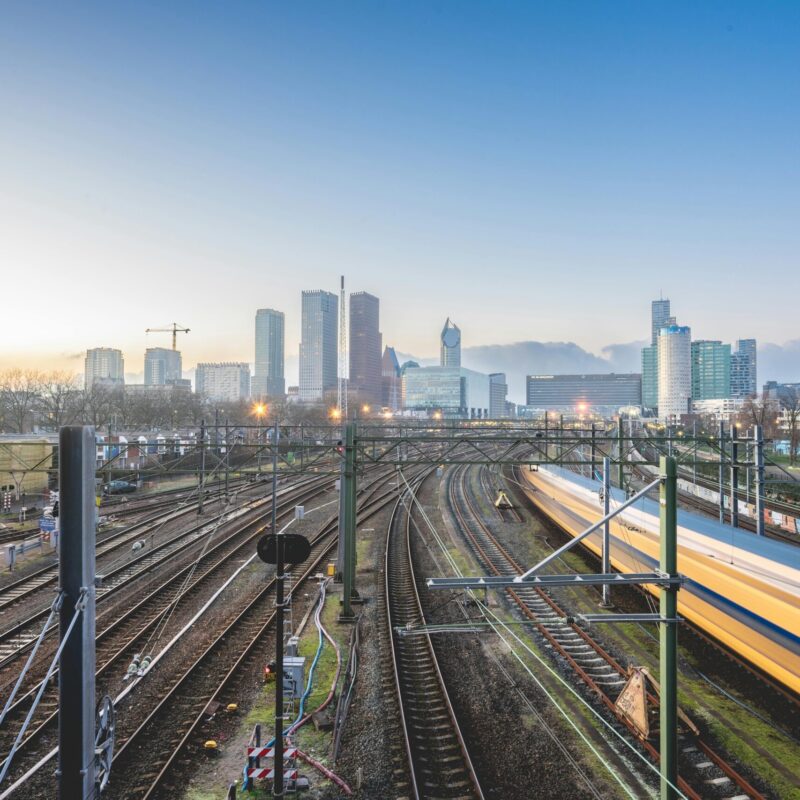
Public transport in the Netherlands is well developed and offers many families a practical alternative to travelling by car. Anyone who is new to The Hague can conveniently use buses, trams, metro services, and trains for travelling to school, commuting to work, and taking day trips. Important aspects include the OV-chipkaart, checking in and out, and special offers for children and families.
BUSES, TRAMS, METRO SERVICES, AND TRAINS IN THE NETHERLANDS
In the Netherlands, the OV-chipkaart (Openbaar Vervoer Chipkaart) is widely used for travel by bus, tram, metro, and train. This card can be used to pay for public transport journeys throughout the country.
In addition to the OV-chipkaart, many transport operators now also allow passengers to pay contactlessly using a debit card, credit card, or smartphone.
TYPES OF OV-CHIPKAART
There are several types of OV-chipkaart:
- Single ticket – for individual journeys, often also available directly on buses or trams.
- Anonymous OV-chipkaart – transferable, can be topped up with credit, and is valid for up to five years.
- Personal OV-chipkaart – registered to one person and required for many subscriptions, discounts, and special offers.
CHECKING IN AND OUT
When travelling by bus, tram, metro, or train, passengers must check in when boarding or entering the station and check out again at the end of the journey.
The main railway stations in The Hague are:
- Den Haag Centraal (CS)
- Den Haag Hollands Spoor (HS)
FREE TRAVEL FOR CHILDREN IN THE HAGUE (“KIDS VOOR NIKS”)
The “Kids voor Niks” programme allows children aged 4 to 11 to travel free of charge on HTM buses and trams in The Hague.
Important information:
- The offer applies exclusively to HTM buses and trams.
- Trains and services operated by other transport companies are not included.
- The application must be submitted by a parent or legal guardian.
- A DigiD, the child’s BSN, and a recent photograph are generally required for the application.
- The card is delivered by post and can then be used immediately.
TRAIN TRAVEL WITH CHILDREN
Children under the age of 4 generally travel free of charge in the Netherlands.
For children aged 4 to 11, the Dutch railway company NS offers discounted travel options, such as the Railrunner ticket, which allows children to travel by train at a reduced fare when accompanied by an adult.
DISCOUNT FOR YOUNG PEOPLE AGED 12 TO 17
Since July 2025, young people aged 12 to 17 have been able to apply for a free NS Flex Dal Voordeel subscription.
Benefits:
- 40% discount on train travel during off-peak hours
- 40% discount at weekends and on public holidays
- No subscription fees until the age of 18
Up-to-date information about tickets, subscriptions, and discounts is available on the websites of the relevant transport operators.
FURTHER INFORMATION: TICKETS, OV-CHIPKAART, AND TIMETABLES

Job Search
Anyone wishing to work in the Netherlands should familiarise themselves with the labour market, application documents, and local practices at an early stage. The Hague offers numerous opportunities for international families, expatriates, and accompanying partners, ranging from international companies and organisations to English-language job vacancies.
JOB SEARCH IN THE NETHERLANDS: PREPARATION AND APPLICATIONS
Anyone wishing to work in the Netherlands should adapt their application documents to Dutch practices in advance. It is advisable to prepare both a CV and a cover letter in English and, where possible, in Dutch.
Job applications in the Netherlands differ in some respects from the formats commonly used in Germany. It may therefore be helpful to adapt your CV and cover letter to Dutch standards.
Information about the Dutch labour market, industries, companies, and employment opportunities is available from organisations such as the German-Dutch Chamber of Commerce (DNHK) in The Hague.
Further information:
- dnhk.org
- werk.nl – the website of the Dutch Employee Insurance Agency, UWV
Numerous online job boards and recruitment platforms also advertise English-language vacancies for international professionals and expatriates.
ONLINE JOB BOARDS IN THE NETHERLANDS
ONLINE JOB BOARDS IN THE NETHERLANDS
Anyone looking for a job in the Netherlands can use a range of national and international job portals. Some of the best-known include:
- monsterboard.nl
- xpatjobs.com
- careerjet.com
- intermediair.nl
- undutchables.nl
- adamsrecruitment.com
- unique.nl/en
- outpostthehague.com/careers/jobsearc.htm
TEMPORARY EMPLOYMENT AND RECRUITMENT AGENCIES
Temporary employment agencies, known in Dutch as uitzendbureaus, can be a good way for newcomers in particular to gain their first professional experience in the Netherlands and establish contacts in the labour market.
Examples:
- bluelynx.com
- netherlands.expatjobs.eu
JOB VACANCIES IN THE HAGUE
Many international organisations, public authorities, and companies publish vacancies directly on their own websites. The Municipality of The Hague also regularly advertises job opportunities:
- denhaag.nl/home/bewoners/gemeente/werkenvoordenhaag.htm
In addition to applying for advertised positions, it may also be worthwhile to submit speculative applications to international companies, organisations, or institutions in The Hague.
WORKING IN THE NETHERLANDS: IMPORTANT INFORMATION
Types of Employment Contract
- Fixed-term contracts, usually for 6 or 12 months
- Project-based contracts
- Freelance or self-employed contracts, known as ZZP contracts
- Permanent contracts
Probationary Period
The probationary period is generally one month. For longer fixed-term or permanent contracts, it may be up to two months.
Fixed-Term Contracts and the “Chain Rule”
A maximum of three consecutive fixed-term contracts may generally be concluded within a period of three years.
If a fourth contract is concluded or the total duration exceeds three years, the employment relationship automatically becomes permanent.
Working Hours
Standard working hours are generally between 36 and 40 hours per week, depending on the industry and the applicable collective labour agreement.
A 40-hour working week is common in international organisations.
Part-Time Work
Part-time work is very common and protected by law.
Individually agreed working days or hours can generally be arranged without difficulty. Employees have the right to request changes to their working hours under the Dutch Flexible Working Act (Wet flexibel werken).
JOBS FOR EXPATS AND INTERNATIONAL PROFESSIONALS
The German-Dutch Chamber of Commerce (DNHK) in The Hague regularly provides information about the Dutch labour market and publishes current job vacancies for German-speaking professionals and international applicants.
Further information:
There are also specialised recruitment agencies that focus on international professionals and expats:
These organisations support jobseekers in finding employment in the Netherlands and often provide additional information about applications, CVs, and the Dutch labour market.

HEALTHCARE
The healthcare system in the Netherlands is well organised, but some procedures differ significantly from those in Germany. Anyone moving to The Hague should arrange health insurance, register with a general practitioner, choose a pharmacy, and organise medical care for their children as early as possible. The role of the general practitioner is particularly important, as they are usually the first point of contact for health-related concerns and specialist referrals in the Netherlands.
HEALTHCARE IN THE NETHERLANDS
The Dutch healthcare system differs in several respects from those of other countries. It is therefore advisable to familiarise yourself with its main procedures at an early stage.
After moving, you should choose and register with a general practitioner (huisarts), a dentist, and a nearby pharmacy as soon as possible. Early registration is recommended, as many medical practices must first add new patients to their system before appointments can be scheduled.
You should also inform your general practitioner of your health insurance details so that treatments and referrals can be billed correctly.
In the Netherlands, the general practitioner is usually the first point of contact for health concerns and, where necessary, coordinates referrals to specialists or other medical facilities.
FINDING A GENERAL PRACTITIONER IN THE NETHERLANDS
The general practitioner (huisarts) is generally the first point of contact for health concerns in the Netherlands. They assess symptoms, make an initial diagnosis, and begin treatment where appropriate.
Unlike in many other countries, access to specialist doctors usually requires a referral from a general practitioner. The general practitioner determines whether further examination or treatment by a specialist is necessary. Exceptions may apply depending on the health insurance policy.
Appointments are generally made by telephone, although online booking through the medical practice’s website or a patient portal is becoming increasingly common.
Certain preventive and basic examinations that are often carried out by specialists in other countries may also be performed by general practitioners in the Netherlands. These include some types of preventive gynaecological examinations.
As general practices can be very busy, particularly in densely populated areas such as The Hague, it is advisable to register as soon as possible after moving.
SPECIALISTS AND REFERRALS
In the Netherlands, treatment by a medical specialist usually requires a referral from a general practitioner (huisarts). This applies to ophthalmologists, orthopaedic specialists, gynaecologists, and many other medical specialties.
The Dutch healthcare system places considerable emphasis on the general practitioner’s role as the first point of contact. Regular preventive examinations and health checks are often specifically offered to certain age groups, risk groups, or people with chronic medical conditions.
A visit to a gynaecologist is not automatically required during pregnancy. In uncomplicated pregnancies, antenatal care is often provided by a midwife (verloskundige). A referral to a gynaecologist is made where there are specific medical concerns or increased risks.
Many specialists work in hospital outpatient clinics known as poliklinieken. These clinics bring different medical specialties together under one roof, making cooperation between treating physicians easier.
When selecting examinations and treatments, consideration is given to medical necessity and current clinical guidelines. The aim is to provide appropriate and effective care. For serious illnesses, treatment methods are often based on internationally recognised medical standards and guidelines.
PREVENTIVE CHECK-UPS FOR BABIES AND YOUNG CHILDREN
In addition to the general practitioner, who treats common illnesses such as colds, children in this age group receive vaccinations and preventive health check-ups through the Consultatiebureau, a child health clinic that can be found in every district.
INTERNATIONAL HOSPITALS AND MEDICAL CENTRES IN THE HAGUE
-
Haga Ziekenhuis Den Haag
Address: Els Borst-Eilersplein 275, 2545 AA Den Haag
Telephone: 070 210 0000
Website: www.hagaziekenhuis.nl -
HMC Westeinde
Address: Lijnbaan 32, 2512 VA Den Haag
Telephone: 088 979 79 00
Website: www.haaglandenmc.nl
INTERNATIONAL HEALTH CENTRE
What is the IHCC?
The International Health Care Centre (IHCC) is a medical facility in the Netherlands specifically geared towards international students, expats, and newcomers.
Services
- General medical care
- Vaccinations and preventive health check-ups
- Assistance with health insurance for expats
- Advice on local healthcare services and specialists
- Appointments available in English
Locations
The centre operates in several cities in the Netherlands, including The Hague, Utrecht, and Amsterdam.
Access
- Registration can usually be completed online.
- Health insurance is required, including international or private insurance.
INTERNATIONAL HEALTH CENTRE THE HAGUE
Address:
Jan van Nassaustraat 125
2596 BS Den Haag, Niederlande
Telephone:
+31 (0)70 306 5100
Website: www.ihch.nl

EMERGENCY AND SAFETY TIPS IN THE NETHERLANDS
In an emergency, you can call the following numbers:
- Police: 112
- Fire brigade: 112
- Ambulance and emergency medical services: 112
Familiarise yourself with the correct procedures in an emergency and with warning systems such as NL-Alert, which notifies the public in the event of disasters or dangerous situations.
A test alarm is carried out at 12:00 noon on the first Monday of every month to check that the system is working properly.

LIVING IN THE HAGUE AND SURROUNDING AREA
Living in The Hague offers international families many opportunities for everyday life, leisure activities, and spending time together. Whether you are looking for shops, sports clubs, swimming lessons, playgrounds, or excursions in the surrounding area, newcomers to The Hague can quickly find a wide range of activities for children, young people, and families.
LIVING, SHOPPING, AND FAMILY LIFE IN THE HAGUE
SUPERMARKETS
Albert Heijn — www.ah.nl
Jumbo — www.jumbo.com
Hoogvliet — www.hoogvliet.com
Spar — www.spar.nl
Lidl — www.lidl.nl
Aldi — www.aldi.nl
Ekoplaza — www.ekoplaza.nl
WHOLESALE STORES
A special membership card is required to shop at wholesale stores. Holders of ESA, European Patent Office, and NATO identification cards may be eligible to shop there.
Sligro — www.sligro.nl
Makro — www.makro.nl
Hanos — www.hanos.nl
DRUGSTORES
Etos — www.etos.nl
Kruidvat — www.kruidvat.nl
Hema — www.hema.nl
SHOPPING CENTRES
In de Bogaard, Rijswijk — www.indebogaard.nl
Leyweg, The Hague — www.leyweg.nl
De Julianabaan, Voorburg — www.julianabaan-voorburg.nl
Stadshart, Zoetermeer — www.stadshart.nl
New Babylon — www.newbabylon.nl
DEPARTMENT STORES
Hema — www.hema.nl
De Bijenkorf — www.debijenkorf.nl
DIY AND HOME-IMPROVEMENT STORES
Karwei — www.karwei.nl
Gamma — www.gamma.nl
Praxis — www.praxis.nl
Hornbach — www.hornbach.nl
MARKETS
General overview — www.hollandsemarkten.nl
The Hague Market (De Haagse Markt) — www.dehaagsemarkt.nl
BAKERIES
Wiener Konditorei — www.wienerkonditorei.nl
Vlaamsch Broodhuys — www.vlaamschbroodhuys.nl
Philippe Galerne, French bakery — www.philippegalerne.nl
TOY SHOPS
Intertoys — www.intertoys.nl
FURNITURE STORES
IKEA, Delft — www.ikea.com
Megastores, The Hague — www.megastoresdenhaag.nl
Furniture district, Leiderdorp — www.woon-leiderdorp.nl
Alexandrium, Rotterdam — www.alexandrium.nl
COMPUTER AND ELECTRONICS STORES
MediaMarkt — www.mediamarkt.nl
PC070 — www.pc070.nl
Student aan Huis B.V. — www.studentaanhuis.nl
Coolblue — www.coolblue.nl
LIBRARIES AND BOOKSHOPS
DISDH Library — www.disdh.nl
German Library The Hague — www.literaturhaus-denhaag.nl
American Book Center — www.abc.nl
Paagman — www.paagman.nl
Public libraries — www.bibliotheekdenhaag.nl
MUSIC LESSONS
We offer a variety of music lessons as part of our afternoon extracurricular programme. Further information is available on our website:
LANGUAGE COURSES
Goethe-Institut — www.goethe.de
Mondriaan — www.rocmondriaan.nl
Couvéehuis — www.welzijnscheveningen.nl/statenkwartier
Dutch for Expats — www.dutchforexpats.com
Language Partners — www.languagepartners.nl
Kleine Deutschschule — www.deutschstunde.com
LEARNING DUTCH THROUGH SELF-STUDY
Delft Method — www.nt2.nl/nl
Taalthuis — taalthuis.com
SPORTS CLUBS FOR CHILDREN IN THE HAGUE
The Hague offers families a wide range of sports clubs, leisure activities, and organised programmes for children and young people. In addition to the sports clubs offered by the German International School The Hague, there are numerous sports associations, swimming schools, and leisure organisations where children can discover new hobbies and make new friends.
The following is a selection of popular sports and leisure activities for families in The Hague and the surrounding area.
SPORTS CLUBS AT THE GERMAN INTERNATIONAL SCHOOL THE HAGUE
The German International School The Hague offers its pupils a varied extracurricular programme with a wide range of sporting activities. From team sports to individual disciplines, there is something for everyone. Further details and the complete programme are available in the “Activities” section of the school’s website.
PUBLIC SWIMMING POOLS (Zwembaden)
Special Considerations
In the Netherlands, the national Zwem-ABC swimming certificates—A, B, and C—play an important role. Many public swimming pools base their safety regulations on these certificates. As a result, children may be required to wear swimming aids in certain areas even if they hold a German swimming certificate.
Note
Before visiting a swimming pool, families should check the applicable rules and bring suitable swimming equipment. Many pools offer swimming lessons, and early registration is recommended. The aim of these courses is generally to obtain the Dutch A, B, or C swimming certificate.
PUBLIC SWIMMING POOLS IN THE HAGUE AND SURROUNDING AREA
- De Blinkerd, Seinpoststraat 150, 2586 HC The Hague
- Zuiderpark, Mr. P. Droogleever Fortuynweg 59, 2533 SP The Hague
- Overbosch, Vlaskamp 3/5, 2592 AA The Hague
- De Houtzagerij, Hobbemastraat 93, 2526 JG The Hague
- Zwembad het Hofbad, Ypenburgse Boslaan 30, 2496 ZA The Hague
- Sterrenbad, Generaal Winkelmanlaan 2, 2243 AZ Wassenaar
- De Fluit, Fluitpolderplein 1, 2262 ED Leidschendam
- De Waterthor, Thorbeckelaan 350, 2564 BZ The Hague
PRIVATE SWIMMING SCHOOLS
- Swimming school at De Blinkerd swimming pool: www.tuimelaer.nl
- Swimkids swimming school: www.swimkids.eu
- Haags Hopje swimming school: www.zwembadhaagshopje.nl
- Easy Swim, Voorschoten and Voorhout: www.easy-swim.nl
SWIMMING CLUBS
- WZK, Wassenaar: www.wzk.nl
RIDING SCHOOLS
- Manege Arckelhoeve: www.arckelhoeve.nl
- Manege Berestein, from the age of 5: www.manegeberestein.nl
- Manege Westkustruiters: www.westkustruiters.nl
FOOTBALL
- Graaf Willem, Wassenaar/Scheveningen: www.graafwillem.nl
- SVV Scheveningen: www.svvscheveningen.nl
- D.H.C. Delft: www.dhc-delft.nl
- HVV RAS: www.hvvras.nl
- Quick, Vogelwijk: www.quick.nl
- HBS, Vogelwijk: www.hbs-craeyenhout.nl
HOCKEY
- Klein Zwitserland, The Hague: www.kleinzwitserland.nl
- HBS Hockey, girls: www.hbs-craeyenhout.nl
- HDM, The Hague: www.hdmonline.nl
- HGC, Wassenaar: www.hgc.nl
- Kieviten, Wassenaar: www.kieviten.nl
TENNIS
- Tennis de Kieviten, Wassenaar: www.kieviten.nl
- LTC Oud, Wassenaar: www.oudwassenaar.nl
- Tennispark de Oude Eik, Wassenaar: www.deoudeeik.nl
- Houtrust, The Hague: www.tennisparkhoutrust.nl
- Leimonias: www.leimonias.nl
ROWING
- Roeivereniging de Laak, beginner courses for adults and children: www.rvdelaak.nl
JUDO
- Benoordenhoutse Judoschool, from the age of 4: www.benoordenhoutsejudoschool.nl
- Judoclub Paddepad, The Hague: www.judopaddepad.nl
YOUTH ORGANISATIONS
Scouting
Scouting is the largest children’s and youth organisation in the Netherlands, with approximately 110,000 members. It is an excellent way to meet Dutch children and families.
OTHER SPORTS AND ACTIVITIES
- Surfing: Aloha / HartBeach
- Skateboarding: various skateparks in The Hague
- Dance and ballet: Danskwartier, The Hague — www.danskwartierdenhaag.nl
- The Little Gym, for children aged 4 months to 12 years, Voorburg — www.thelittlegym.eu
- Athletics: www.haagatletiek.nl
Many families who are new to The Hague use sports clubs and leisure activities to make contacts and settle into their new surroundings more quickly. Swimming, hockey, football, tennis, judo, and scouting are particularly popular. Most clubs offer introductory sessions or trial lessons.

LEISURE ACTIVITIES
The Hague and the surrounding cities offer families many opportunities for day trips, cultural experiences, and activities together. Museums, historic sites, science centres, and child-friendly attractions are particularly suitable for discovering the Netherlands and enjoying varied weekends.
MUSEUMS FOR FAMILIES AND CHILDREN
Purchasing a Museum Card is often worthwhile after just two museum visits per year.
ART AND HISTORY MUSEUMS
Kunstmuseum, The Hague — www.kunstmuseum.nl
Rembrandt House Museum, Amsterdam — www.rembrandthuis.nl
Anne Frank House, Amsterdam — www.annefrank.org
Rijksmuseum, Amsterdam — www.rijksmuseum.nl
The Hague Historical Museum, The Hague — www.haagshistorischmuseum.nl
Mauritshuis, The Hague — www.mauritshuis.nl
Escher in The Palace, The Hague — www.escherinhetpaleis.nl
The Mesdag Collection, The Hague — www.demesdagcollectie.nl
SCIENCE AND NATURAL HISTORY MUSEUMS
NEMO Science Museum, Amsterdam — www.e-nemo.nl
CORPUS Museum, Leiden — www.corpusexperience.nl
Naturalis, Leiden — www.naturalis.nl
Maritime Museum, Rotterdam — www.maritiemmuseum.nl
Museum and Observatory Sonnenborgh, Leiden — www.sonnenborgh.nl
OTHER MUSEUMS
National Maritime Museum, Amsterdam — www.hetscheepvaartmuseum.nl
Railway Museum, Utrecht — www.spoorwegmuseum.nl
Batavia Shipyard, Lelystad — www.bataviawerf.nl
Space Expo, Noordwijk — www.space-expo.nl
Beelden aan Zee, Scheveningen — www.beeldenaanzee.nl
Museon, The Hague — www.museon.nl
Louwman Museum, The Hague — www.louwmanmuseum.nl
Children’s Book Museum, The Hague — www.kinderboekenmuseum.nl
Muzee, Scheveningen — www.muzeescheveningen.nl
The Prison Gate Museum, The Hague — www.gevangenpoort.nl

OUTDOOR ACTIVITIES
The Hague and the surrounding area offer many opportunities to spend time outdoors. Whether visiting nature reserves, zoos, playgrounds, children’s farms, or enjoying activities at the beach, families will find numerous places in and around The Hague for day trips, exercise, and shared experiences with children.
NATURE PARKS AND ZOOS IN THE HAGUE AND SURROUNDING AREA
Avifauna Bird Park, Alphen aan den Rijn — www.avifauna.nl
De Biesbosch National Park — www.np-debiesbosch.nl
Diergaarde Blijdorp Zoo, Rotterdam — www.diergaardeblijdorp.nl
ARTIS Zoo, Amsterdam — www.artis.nl
Keukenhof, Lisse — www.keukenhof.nl
Archeon Museum Park, Alphen aan den Rijn — www.archeon.nl
Fun Forest Climbing Park, Amsterdam — www.funforest.nl
Madurodam, The Hague — www.madurodam.nl
Noah’s Ark, Dordrecht — www.arkvannoach.com
Zuiderzee Open-Air Museum, Enkhuizen — www.zuiderzeemuseum.nl
De Olmenhorst Estate, Lisserbroek — www.olmenhorst.nl
2SU5, Wateringen — www.2sur5.nl
Euromast, Rotterdam — www.euromast.nl
Kids Tour, The Hague — www.kidsproof.nl
PLAYGROUNDS AND FAMILY PARKS
Linnaeushof, Europe’s largest playground — www.linnaeushof.nl
De Hoge Veluwe National Park — www.hogeveluwe.nl
Water playground and children’s farm, Delft — www.delftsehout.nl
Plaswijckpark Family Park, Rotterdam — www.plaswijckpark.nl
CHILDREN’S FARMS AND PETTING ZOOS
pfelplantagen (selber pflücken) > www.olmenhorst.nl
Boerderij het Geertje in Zoeterwoude > www.hetgeertje.nl
Boerderij Nellesteijn > www.nellesteijn.nl
Allgemeine Informationen nach PLZ > www.uitmetkinderen.nl
Stadsboerderijen in Den Haag > www.denhaag.nl/home/bewoners/natuur-en-milieu/to/Stadsboerderijen-in-Den-Haag.htm

INDOOR ACTIVITIES
Even in rainy or cooler weather, there are many opportunities for families to stay active in The Hague. Swimming pools, indoor playgrounds, sports centres, and other leisure facilities offer children and young people a wide range of activities regardless of the weather.
SWIMMING POOLS FOR FAMILIES
Tikibad Duinrell, Wassenaar — www.duinrell.de/tikibad
Thermen Holiday, Schiedam — www.thermenholiday.nl
Elysium Sauna, Blijkswijk — www.elysium.nl
A list of additional swimming pools can also be found in the “Sports Clubs” section.
Sport and Swimming in the Netherlands
Families with children should be aware of an important difference when swimming in the Netherlands. Unlike in Germany, the Netherlands uses different national swimming certificates, such as the Zwem-ABC and other recognised swimming diplomas issued under the Nationale Raad Zwemveiligheid.
Even if children already hold German swimming certificates such as the Seepferdchen or Bronze badge, they may still be required to wear flotation aids, such as armbands, in public swimming pools. This is because Dutch regulations focus on water-survival skills rather than swimming technique alone.
Families should therefore check the applicable rules before visiting a swimming pool and bring the appropriate equipment. Further information: Zwemdiplomas
INDOOR PLAYGROUNDS IN THE HAGUE
Planetjump, Den Haag > www.planetjump.nl
JumpSquare, Rijswijk > www.trampolinepark.nl/nl/locaties/rijswijk
Monkeytown, Rijswijk > www.monkeytown.eu/nl/rijswijk/home
Kids Eiland, Den Haag > www.kidseiland.nl
SPORTS AND ACTIVE LEISURE
Bowling, Scheveningen — www.bowlingscheveningen.com
GlowGolf, Scheveningen — www.glowgolf.nl/scheveningen
Go-karting, Delft — www.raceplanet.nl
De Uithof, The Hague — www.deuithof.nl
Laser gaming, Rotterdam — www.lasergamerotterdam.nl
SnowWorld, Zoetermeer — www.snowworld.nl
Please note that all information provided on this website is supplied without guarantee and has been compiled to the best of our knowledge and belief. As regulations, responsibilities, and procedures may change, we recommend checking the latest information directly with the relevant official authorities.
FREQUENTLY ASKED QUESTIONS ABOUT MOVING TO THE NETHERLANDS WITH CHILDREN
WHAT SHOULD FAMILIES DO FIRST AFTER MOVING TO THE NETHERLANDS?
The first important steps include registering with the municipality, obtaining a citizen service number (Burgerservicenummer, BSN), arranging health insurance, opening a bank account, and choosing a suitable school or childcare provider.
WHICH SCHOOL IS SUITABLE FOR GERMAN-SPEAKING CHILDREN IN THE HAGUE?
The German International School The Hague offers German-speaking and international families a familiar educational environment with an international focus.
CAN MY CHILD START AT THE DISDH IF WE ARE NEW TO THE NETHERLANDS?
Yes. Families can contact the DISDH for individual advice about admission and starting school.
WHICH NEIGHBOURHOODS IN THE HAGUE ARE ATTRACTIVE FOR FAMILIES?
Many international families consider neighbourhoods such as Statenkwartier, Belgisch Park, Duinoord, Archipelbuurt, Vogelwijk, and Benoordenhout. Important factors include proximity to the school, public transport, shopping facilities, and leisure activities.
WHAT IS A BSN AND WHY IS IT IMPORTANT?
The BSN, or Burgerservicenummer, is a personal identification number in the Netherlands. It is required for dealing with public authorities, arranging health insurance, opening a bank account, starting work, and completing many other administrative procedures.
NEW TO THE HAGUE WITH CHILDREN?
The German International School The Hague supports international families as they settle into school life and their new surroundings in the Netherlands. We look forward to getting to know you and your family.
Please feel free to contact us to arrange a personal consultation.